
Founding Design Strategist, Pharmesol
At Pharmesol, we built agentic AI for pharmacy operations. Voice and messaging that handles the high-volume, low-margin work quietly draining pharmacy teams. Over my time there, we almost doubled our pharmacy customers, kept expanding scope with the customers we already had, and successfully got acquired. My role spanned design strategy, prompt engineering, and customer-facing work.
The hardest design problem wasn't the AI itself. It was figuring out what to automate and getting it right without burning the customer's time. This case study focuses on this piece of the puzzle.
The Constraint
Pharmacy technicians are already stretched thin between staffing shortages and an abundance of tasks. You have to be mindful of their time when scoping. But scope it wrong and you build the wrong thing, providing minimal value to the pharmacy.
The standard approach, long interviews and workshops, constant back and forth, would have been a barrier for customers. We needed a frictionless and easy scoping process that flexed to the customer's reality.
What We Built
A scoping approach designed around three things: customer time, the messiness of real workflows, and the gap between what people say they do and what they actually do.
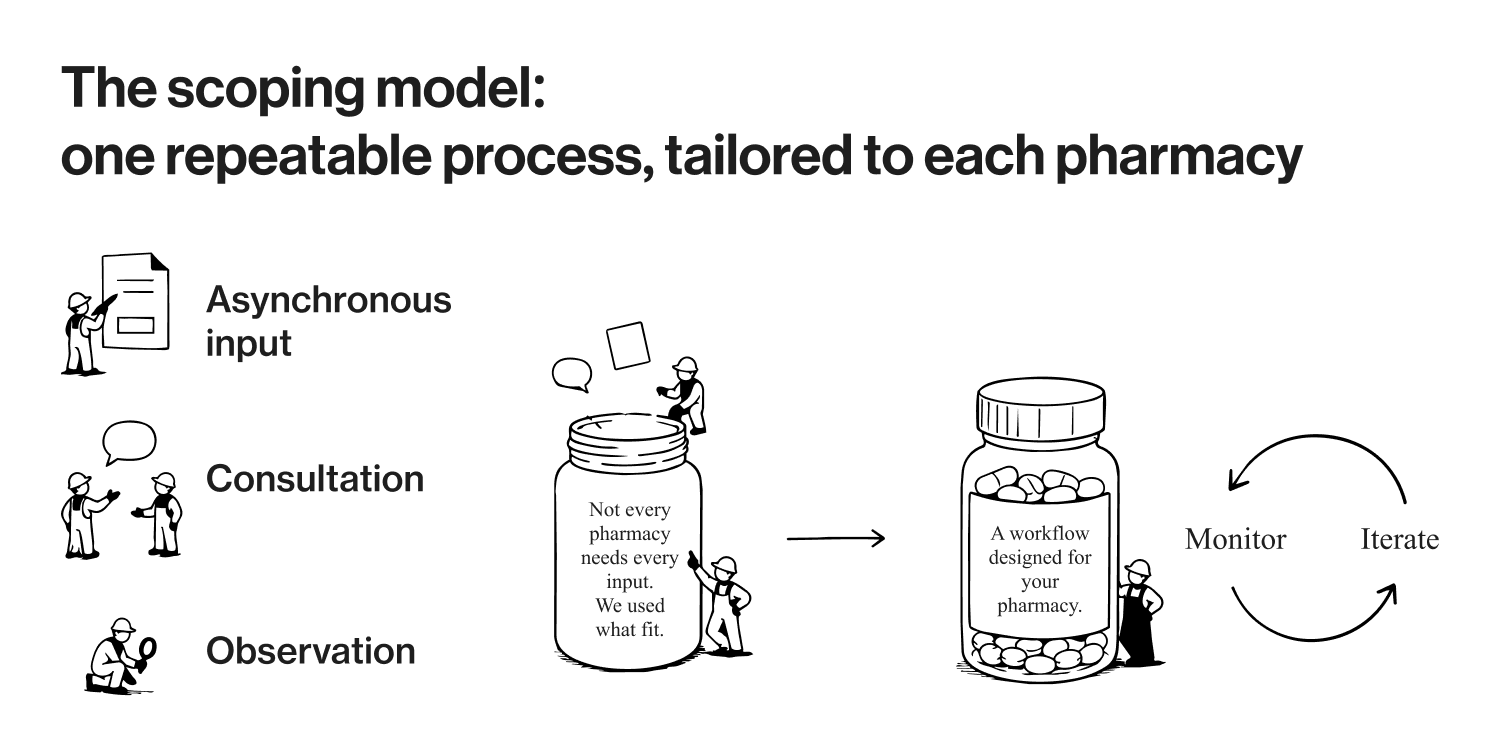
Our process combined asynchronous inputs the customer could give us on their own time, a focused conversation with the operators closest to the work, and observational sessions where useful.
Not every customer needed every input. New workflows we'd never seen got more time. New offerings, where there was nothing to observe yet, got handled differently. The process adapted to what was in front of us.
What changed after launchScoping doesn't end at launch. Once an automation went live, we monitored real calls and watched for the things scoping couldn't predict.
The clearest example: the Double Standard on waiting time
Here's a design problem we couldn't have predicted in advance: people wait patiently while a human types into a computer to look something up. The same wait, from a machine, feels intolerable. A caller will repeat their name three times for a person, but hang up if the AI asks twice.
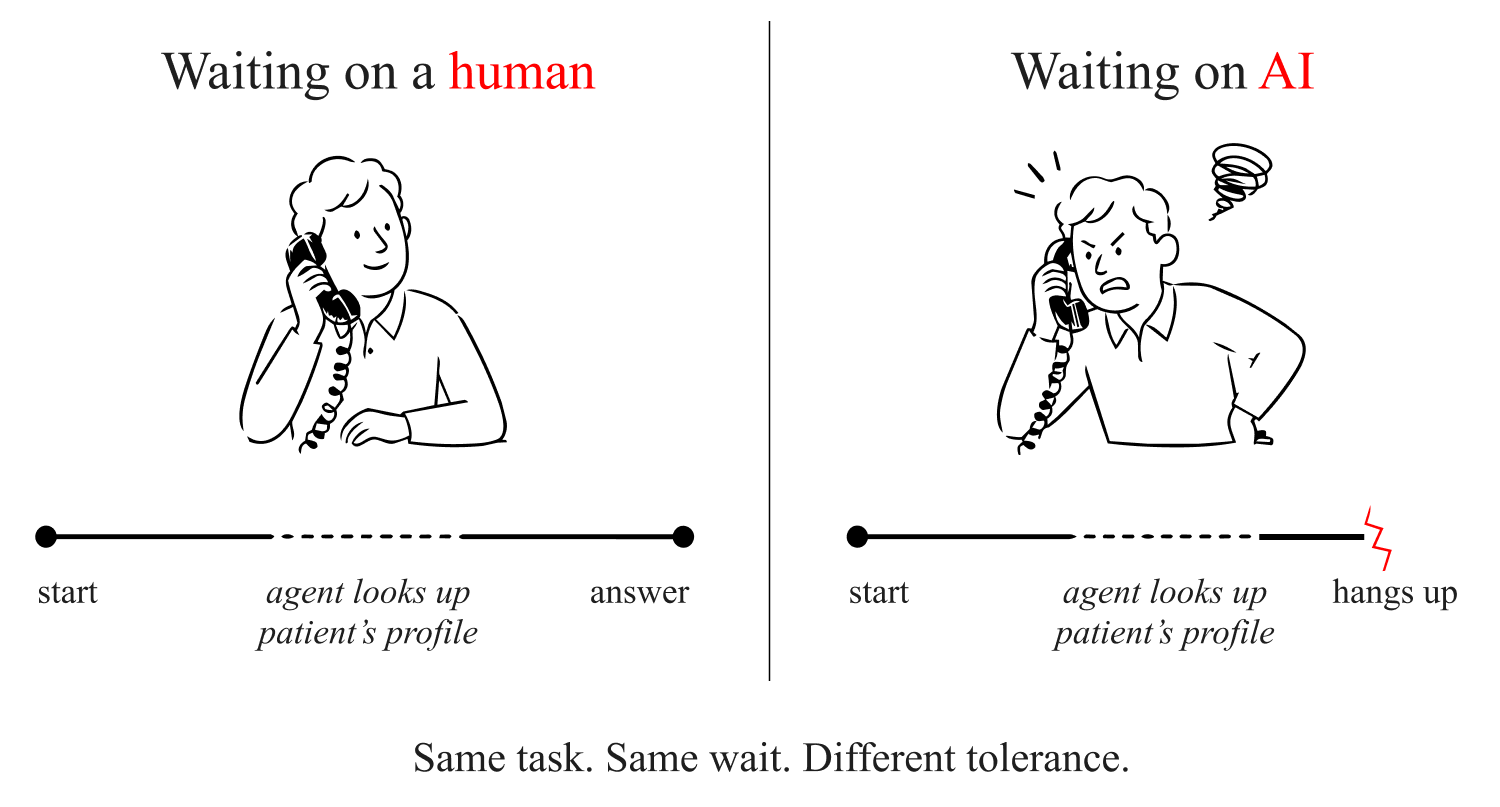
The response wasn't to make the AI faster. It was to shape the conversation. Preempt where it veered off track. Guide it forward before the caller filled it with something unhelpful. Fill the silence with the right kind of comments or sounds to indicate progress.
The scoping process learned from this. The monitoring loop fed back into how we built the next workflow.
What worked
The scoping process let us launch new workflows for new pharmacies and keep expanding workflows for existing ones. Each organisation's pharmacy management system, processes, and needs were different. The approach gave us a way to tailor without restarting. The signal that mattered: pharmacies kept asking to automate more scopes.
Takeaways
1. Everything is a design problem, as our CEO liked to say. Latency, scoping, workflow selection, conversation experience. None of them look like design problems at first. Framing them that way is what lets you solve them with judgment instead of brute force. That's the part that doesn't scale automatically.
2. Designing AI is designing behaviour, not interface. What the system says, when, and how it holds a conversation.
3. Building AI products means working at the edge of the tools. New models, new prompting patterns, new evaluation approaches showed up weekly. We were automating our own work with the same kinds of systems we were building for pharmacies. The job was as much about learning fast as designing well.