
Design Researcher + Strategist, MIT.
Recognized by MIT $100K, NSF I-Corps, and the Sandbox Innovation Fund. Featured in MIT News. Collaboration with Jonathan Zhou and Kate Tyshchenko.
Every year, 2.5 million patients in the US develop pressure injuries, costing hospitals $26.8 billion. The fix sounds simple: turn patients every two hours. So why does it keep failing?
The Wrong Approach
We started where most teams would: a pressure-sensing mattress cover that detects movement and documents turns automatically. Intuitive, but cumbersome. We talked to nurses who said the setup and cleaning added work. They wouldn't use it.
The Research: We interviewed and observed 80+ nurses and caregivers across hospitals, senior care, and home care, shadowing shifts to see how turning actually happened versus how it was supposed to. The answer was the same everywhere. Nurses are short-staffed and overworked, and every tool meant to help, manual stickers, trackers, made more work for them. The problem wasn't that nurses didn't care. Every existing solution asked more of people who were already doing their best.
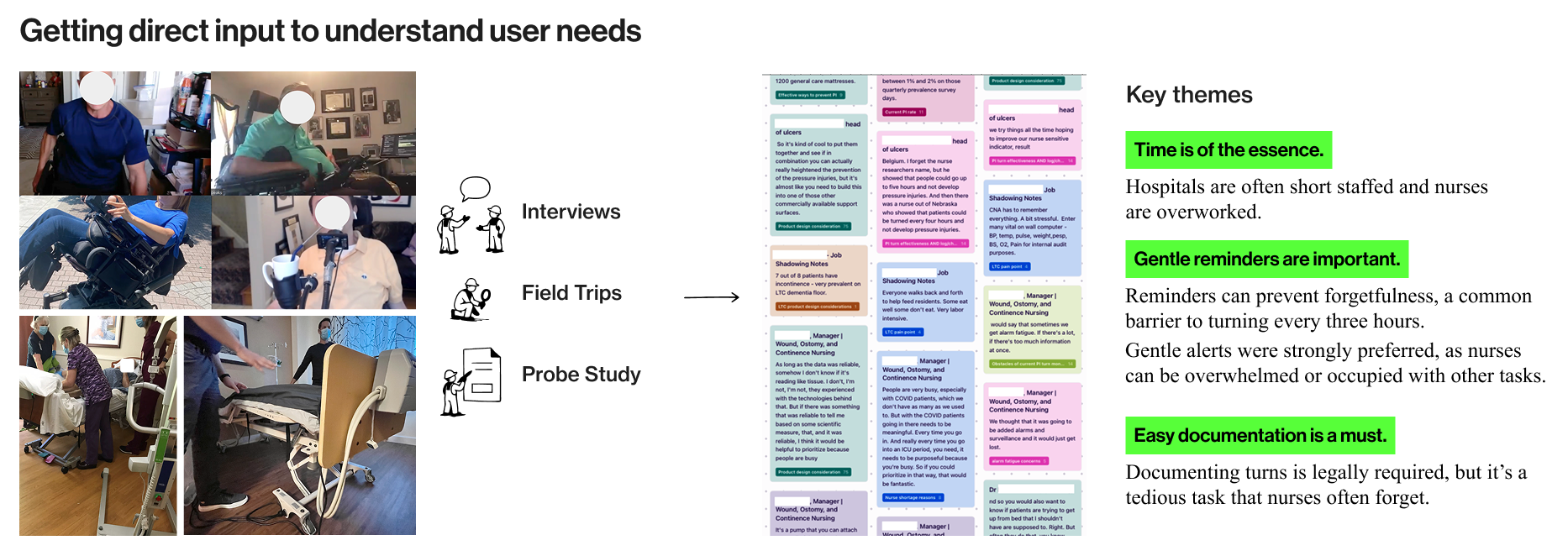
So we reframed: how do we make turning easier without adding one more thing for a nurse to manage?
The breakthrough wasn't a better sensor. It was realising the sensor didn't belong on the bed at all.
We took the sensor off the bed entirely. Wall-mounted infrared sensors read body position by depth, no wearables, no stickers, no contact, nothing to set up or maintain. Because they read depth and not images, they protected patient privacy. Machine vision confirmed whether a turn actually happened and documented it for compliance, with no human input.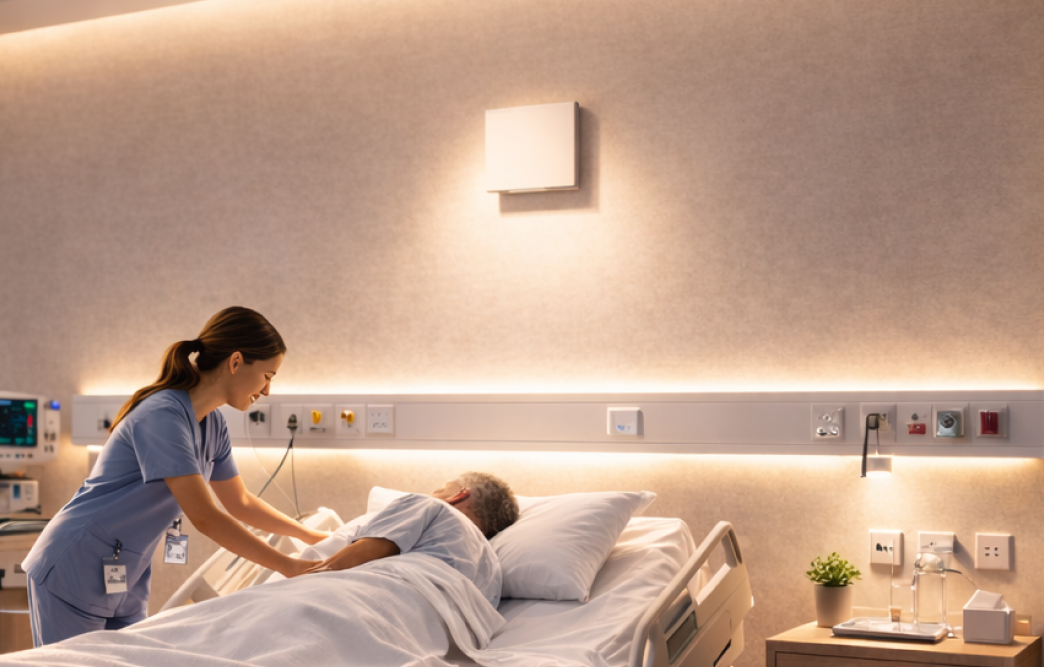
Validation: Did it Work?
Hospitals wanted in. $775K in Letters of Intent, partnerships with Brigham and Women's Hospital, Sturdy Memorial, and Mass General, a place in Nvidia's Inception program, and preliminary testing at Mary Ann Morse.
Takeaways
The intuitive solution added a system. The right one removed it. The best design, like the best automation, takes work away instead of handing people something new to manage.