I remember arriving at work each morning and checking Hypebeast or Highsnobiety before opening my inbox, curious to see what had appeared overnight: a collaboration, a collection, a lecture.
The internet was already relentless, but it felt as though culture was moving somewhere exciting.
I was working as a designer at MCM then; I work in AI now. From that strange vantage point, somewhere between fashion and technology, I keep returning to a few questions.

DOES TODAY'S CULTURE FEEL STALE TO YOU, TOO?
We are supposedly on the edge of enormous technological change, yet culture often feels strangely flat. There is no shortage of discourse about AI, creativity, and taste, but much of it feels reactive.
We are constantly catching up to technologies already being built, debating their implications after the fact.
There is plenty of noise, but not much signal.
Abloh always led the movement. He did not simply react to culture; he shaped it with intent.
Culture was fast, but Abloh was faster.
The evidence is in the archive: Figures of Speech, the research behind his first Louis Vuitton collection, and the lectures he gave at Harvard, Columbia, RISD, and elsewhere. The hype was visible, but so was the thinking.

2. WHY WAS IT SO EXCITING BACK THEN?
Like the DJ that he was, Abloh connected worlds that were usually kept apart: youth culture and luxury, streetwear and academia, DJs and architects, the internet and institutions. He knew which ideas should meet. That, to me, is culture.
The closest parallel may be the Bauhaus: a school, a pedagogy, a philosophy, and an industry at once. Or Andy Warhol’s prolific pop art Factory. Abloh built something similar without a fixed campus. And we were able to witness this unfolding in real time.
It took me nearly ten years in the field to realise how rare that period was. The Nike’s The Ten, Off-White, IKEA collaboration, Louis Vuitton—each project felt distinct, but part of a larger, coherent world. They were collisions between design systems and cultural hierarchies. And it was so much fun.
His impact was structural as much as aesthetic. He understood the tension between tourists and purists, and he helped reverse the traditional flow of taste. Streetwear, sneaker culture, and internet references led trends that were taken on by the couture houses and gatekeepers.
By the time Abloh took over Louis Vuitton menswear in 2018, it felt historic, but also inevitable.

3. SO WHERE IS CULTURE HAPPENING TODAY?
Or to fellow designers: where is design happening today?
Because I would love to be a part of it.
Perhaps I don’t know where to look. I do not think we have lost our appetite.
If anything, we are starved of good ideas and good information.
Who is connecting the fragments? Who is translating technological change into cultural meaning? Who is bringing young people, institutions, education, and industry into the same conversation?
I am encouraged by the work of the Virgil Abloh Foundation, teaching young talent the best this world has to offer. And I am sure meaningful movements are happening elsewhere, perhaps at a smaller scale.
Still, I cannot stop missing Abloh's influence and wonder what he would have done next.
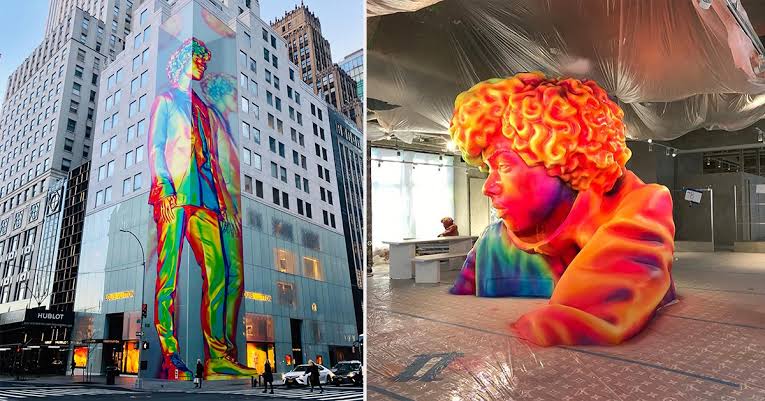
OR ARE WE JUST… GROWING UP?
It did cross my mind that perhaps this essay is really about time. Maybe the industry feels less exciting because I am no longer its ideal youth audience. Maybe Abloh’s work reached me at exactly the right age, when my creative identity was still forming. Maybe I am simply asking to feel that intensity again. Or perhaps I am asking for another source of dopamine.
Nostalgia edits ruthlessly. It preserves the breakthroughs and discards the mediocre. Still, I do not think nostalgia explains everything that was Abloh’s magic.
Anyhow, if you have the answer for where I should go or think we should work on something together, ping me!